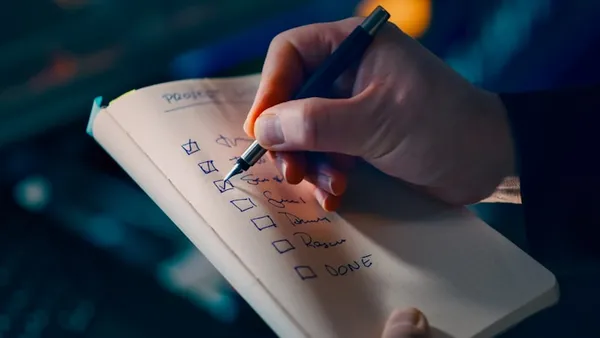
We have collected 106 free practice exams and study resources for Studienkolleg preparation. They cover 7 subjects: Math (53 resources), German (32), Physics (15), Chemistry (11), Biology (9), Economics (9), and History (8). Every resource is free, sourced from official Studienkolleg publications, and organized by subject and exam type on our sample exams page. Whether you are preparing for the Aufnahmeprüfung (entrance exam) or the Feststellungsprüfung (final assessment exam), this collection gives you real practice material from the institutions that write the actual tests.
How to Use This Collection
Start by identifying what you actually need. Not all 106 resources are relevant to you — your course type determines which subjects matter.
Step 2: Match your course type to subjects. Your Schwerpunktkurs determines which subjects you will be tested on:
Course Type
Core Subjects
Key Resources
T-Kurs (Technical)
Math, Physics, Chemistry
53 + 15 + 11 resources
W-Kurs (Economics)
Math, Economics
53 + 9 resources
M-Kurs (Medical)
Math, Biology, Chemistry
53 + 9 + 11 resources
G-Kurs (Humanities)
German, History
32 + 8 resources
S-Kurs (Languages)
German
32 resources
Step 3: Use them as timed tests. Do not just read through the problems. Set a timer, work through the exam under realistic conditions, then check your answers. A student at Studienkolleg Mittelhessen once told us the biggest difference between her first and second attempt was simply doing practice exams under time pressure.
Step 4: Browse the full collection. Head to our sample exams page to filter by subject, exam type, or Studienkolleg.
Entrance Exam (Aufnahmeprüfung) Practice
The Aufnahmeprüfung is the test you take before being admitted to a Studienkolleg. Every public Studienkolleg requires it. The exam has two parts: a German language test and — for most course types — a math test. Some institutions add subject-specific questions for T-Kurs or M-Kurs applicants.
What the German Section Tests
Every Studienkolleg tests your German at or above the B2 level. The most common format is the C-Test: short texts where the second half of every other word is deleted. You must reconstruct the missing letters. It sounds simple. It is not. The C-Test punishes weak grammar, spelling, and vocabulary equally. Beyond the C-Test, expect reading comprehension questions and a grammar section (gap-fill exercises testing verb tenses, adjective endings, and prepositions).
We have 32 German practice resources in our collection — C-Test exercises, reading comprehension texts, and grammar drills from multiple Studienkollegs. Start here: German sample exams.
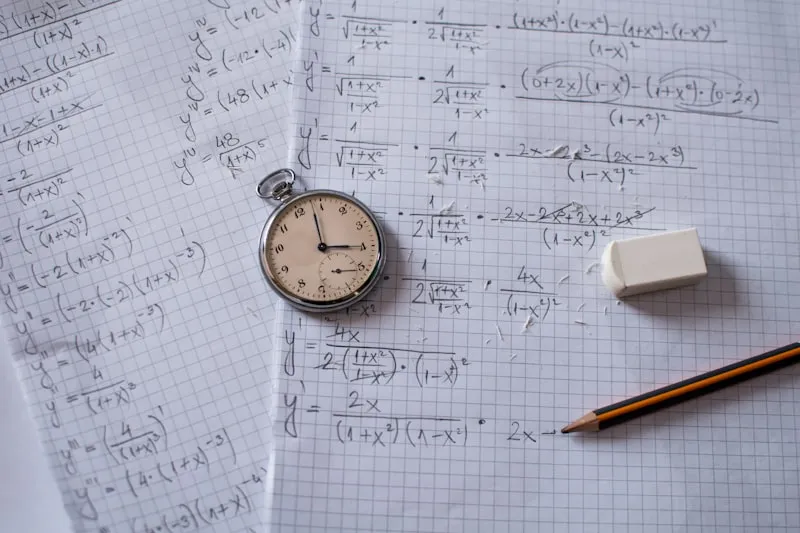
T-Kurs, W-Kurs, and M-Kurs applicants take a math test. The level varies between institutions, but expect questions on fractions, powers, roots, linear and quadratic equations, basic functions, and geometry. Some Studienkollegs also include percentages, proportionality, and basic probability.
We have 53 math practice resources — from basic arithmetic to pre-calculus. Browse them here: Math sample exams.
Math is the most tested subject across all Studienkolleg exams. Whether you are applying for the T-Kurs, W-Kurs, or M-Kurs, math will be on your entrance exam and your FSP. That is why we have the largest collection in this subject: 53 resources.
What Topics Are Covered
The resources span the full range of difficulty:
Level
Topics
Who Needs It
Basics
Fractions, percentages, powers, roots
All applicants (entrance exam)
Intermediate
Linear/quadratic equations, functions, systems of equations
Start with a diagnostic test. Pick one intermediate-level practice exam and try it under timed conditions. If you score below 60%, go back to the basics. If you score above 80%, jump to advanced material.
A practical example: a T-Kurs applicant at Studienkolleg Hamburg reported spending 3 weeks on fractions and equation solving before touching any calculus. That foundation work made the advanced topics click faster.
Focus areas by course type:
T-Kurs: Derivatives, integrals, vector calculus, and analytical geometry are your FSP priorities
W-Kurs: Linear optimization, probability, and statistics matter most
M-Kurs: Focus on algebra and functions. The FSP math is less advanced than in the T-Kurs
German is tested in every Studienkolleg exam — entrance and FSP alike. Our 32 German resources cover the three main formats: C-Tests, reading comprehension, and grammar exercises.
C-Test: The Format You Must Practice
The C-Test is unlike any language test you have taken before. Half of every other word is missing. You fill in the blanks. Sounds easy until you try one:
“Die Uni_______ Heidelberg wu____ im Ja____ 1386 gegrue____ und i____ damit d____ aelteste Univer______ in Deutsch______.”
You need to reconstruct: Universität, wurde, Jahr, gegründet, ist, die, älteste, Universität, Deutschland. That requires knowing spelling, grammar endings, and compound nouns — all at speed.
Practice tip: Do one C-Test every morning for 4 weeks straight. Your first attempts will feel painful. By week 3, the pattern recognition becomes automatic. Time yourself: most C-Test sections allow 15 to 30 minutes for 3 to 5 texts.
Reading Comprehension and Grammar
The reading comprehension section uses academic-style texts at B2 to C1 level. Topics range from science to social issues. The grammar section tests verb tenses (Präteritum, Perfekt, Konjunktiv II), adjective declension, relative clauses, and the passive voice.
Science subjects are tested in the FSP for T-Kurs and M-Kurs students. Some Studienkollegs also include basic science questions in the entrance exam for these course types.
Physics: 15 Resources
Physics matters most for T-Kurs students. The FSP covers mechanics, electricity and magnetism, optics, and thermodynamics. Some Studienkollegs add atomic physics.
What to expect: Calculation-heavy problems. You will work with formulas for force, energy, resistance, and wave properties. A typical FSP physics problem gives you a scenario — a circuit diagram, a projectile, a lens setup — and asks you to calculate specific values.
Study tip: Memorize the core formulas, but focus on understanding when to apply them. Practice with our physics materials first, then try combining physics and math problems. The FSP often requires multi-step calculations.
Chemistry appears in both the T-Kurs and M-Kurs FSP. Topics include general chemistry (atomic structure, periodic table, bonding), inorganic chemistry (reactions, acids/bases, redox), and organic chemistry (hydrocarbons, functional groups).
Study tip: Start with nomenclature and reaction balancing. These basics appear in every chemistry exam. Once you can balance equations in your sleep, move to organic chemistry — it is where most students struggle.
Biology is primarily relevant for M-Kurs students. The FSP covers cell biology, genetics, evolution, ecology, and human physiology. Expect a mix of diagram-labeling, short-answer questions, and longer written explanations.
Study tip: Biology exams reward precise German vocabulary. Learn the German terms for cell organelles, genetic processes, and anatomical structures early. Knowing the concept in English but not the German word costs you points.
Economics (Wirtschaftslehre) is the defining subject for W-Kurs students. The FSP tests microeconomics, macroeconomics, and business basics. Typical topics: supply and demand, market forms, GDP, inflation, basic accounting, and business organization.
What to expect: A mix of theory questions (“Explain the difference between a monopoly and an oligopoly”) and calculation problems (break-even analysis, cost functions, interest calculations).
Study tip: Economics exams require you to explain concepts in clear, structured German. Practice writing 150-word answers to theory questions. The math in economics is simpler than in the T-Kurs, but the writing component is heavier.
History (Geschichte) is the core subject for G-Kurs students. The FSP covers German and European history — typically from the French Revolution to German reunification, with a focus on the 20th century: Weimar Republic, National Socialism, division of Germany, Cold War, and reunification.
What to expect: Essay-style questions. You will need to analyze primary sources, explain historical causes and consequences, and argue a position. The writing quality matters as much as the historical knowledge.
Study tip: Build a timeline of key events and dates from 1789 to 1990. Then practice writing structured essays: introduction, three arguments, conclusion. Time yourself — the FSP gives you 3 to 4 hours, but that goes fast when you are writing in German.
The Feststellungsprüfung is the final exam after completing your Studienkolleg year. Passing it earns you the fachgebundene Hochschulzugangsberechtigung — the qualification to study at a German university in your course type’s subject area.
How the FSP Differs from the Entrance Exam
The entrance exam checks whether you are ready to start Studienkolleg. The FSP checks whether you are ready for university. The difference is significant:
Aspect
Entrance Exam
FSP
German level
B2
C1
Math level
Basic to intermediate
Advanced (calculus, vectors)
Subjects tested
German + Math
German + 2—3 course-specific subjects
Exam length
2—3 hours total
3—4 hours per subject
Stakes
Determines admission
Determines university eligibility
Using Our Resources for FSP Prep
Our collection includes FSP-specific materials from multiple Studienkollegs. Filter by exam type on our assessment exam page to find them.
The best FSP preparation strategy: combine our sample exams with your Studienkolleg’s own materials. Your professors will give you practice exams during the second semester. Use our resources to supplement that, especially for subjects where you need extra practice.
Study Plan: 8-Week Preparation Schedule
This plan works for entrance exam preparation. Adjust the subjects based on your target course type.
Weeks 1—2: Diagnostic Phase
Take one practice test in each of your relevant subjects. Do not study beforehand — the point is to find out where you stand.
German: Complete one C-Test and one reading comprehension exercise. Score yourself honestly.
Math: Try one intermediate-level practice exam. Note which topics you could not solve.
Other subjects: If you are a T-Kurs applicant, try one physics problem set. M-Kurs? Try biology.
After scoring, make a list of your weak areas. This list drives the next 4 weeks.
Weeks 3—5: Focused Study
Spend 2 to 3 hours daily on your weakest subjects.
German: One C-Test every morning (15 minutes). Grammar exercises in the afternoon (30 minutes). Read one German news article daily and look up every unknown word.
Math: Work through basics first (fractions, equations), then functions and geometry. Do 10 to 15 problems per topic before moving on.
Other subjects: Study the theory first, then practice with our sample exams.
Weeks 6—7: Full Practice Exams
Switch from topic-based study to full exams under timed conditions.
Do one complete practice exam per subject per week
Simulate real exam conditions: no phone, no breaks, strict time limit
After each exam, review every mistake. Write down the correct approach for each problem you got wrong.
Week 8: Review and Rest
Review your mistake notes from weeks 6 and 7
Do one final timed practice exam in your weakest subject
Rest the last 2 days. Sleep well. Eat properly. Walk into the exam confident.
Total study time: approximately 150 to 200 hours over 8 weeks (2.5 to 3.5 hours daily).
Frequently Asked Questions
Are these the actual exams or similar practice materials?
Both. Some resources are official sample exams published directly by Studienkollegs — they show you exactly what the institution’s exam looks like. Others are practice materials designed to match the difficulty and format of real exams. We label the source for each resource on our sample exams page so you know what you are working with.
How difficult is the Studienkolleg entrance exam?
The German section requires solid B2-level skills. If you can read a newspaper article and understand 90% of it, you are in the right range. The math section tests topics up to the 10th or 11th grade level in most countries — quadratic equations, basic functions, geometry. The difficulty is not in individual problems but in the time pressure and the combination of subjects on one exam day.
Do all Studienkollegs use the same entrance exam?
No. Each Studienkolleg writes its own exam. The general format is similar — German test plus math test — but the specific questions, difficulty level, and time limits differ. That is why practicing with materials from multiple institutions is valuable. You build flexibility instead of preparing for one narrow format. Compare different Studienkollegs to see which ones match your level.
How many times can I take the entrance exam?
At most Studienkollegs, you can attempt the entrance exam twice. If you fail twice at the same institution, you cannot apply there again. However, you can apply to a different Studienkolleg and take their exam. There is no nationwide limit on total attempts. Some students apply to 2 or 3 Studienkollegs in the same application period to maximize their chances.
Is the FSP harder than the entrance exam?
Yes, significantly. The entrance exam tests B2 German and secondary-school-level math. The FSP tests C1 German and university-preparation-level subject knowledge — calculus, advanced physics, or detailed historical analysis depending on your course type. You have an entire year of Studienkolleg classes to prepare for the FSP, though. The entrance exam you prepare for mostly on your own.
Where can I find more practice materials?
Start with our complete collection of 106 resources. Beyond that, check the requirements page of each Studienkolleg you are applying to. Many institutions publish 1 to 2 sample exams on their own websites. Your local Goethe-Institut may also offer C-Test practice materials for the German section.
Can I prepare for the entrance exam on my own?
Yes. Many students prepare independently using free resources like the ones in our collection. The key is discipline: follow a structured study plan (see the 8-week schedule above), do timed practice exams regularly, and be honest about your weak areas. If your German is below B1 or your math foundations are very weak, a preparation course can help — but it is not strictly necessary.
How long should I prepare for the entrance exam?
Eight to twelve weeks is the standard recommendation. With 2 to 3 hours of focused daily study, 8 weeks is enough if your German is already at B2 and your math is at a 10th-grade level. If you are starting from B1 German or have significant gaps in math, plan for 12 weeks or more. The 8-week plan above gives you a concrete schedule to follow.
Next Steps
You have 106 free resources waiting for you. Here is where to go next:
The entrance exam is a real barrier. Students who prepare with actual practice materials pass at higher rates than those who just study textbooks. Start with one practice test today. Time yourself. See where you stand. Then use the 8-week plan to close the gaps.
 university